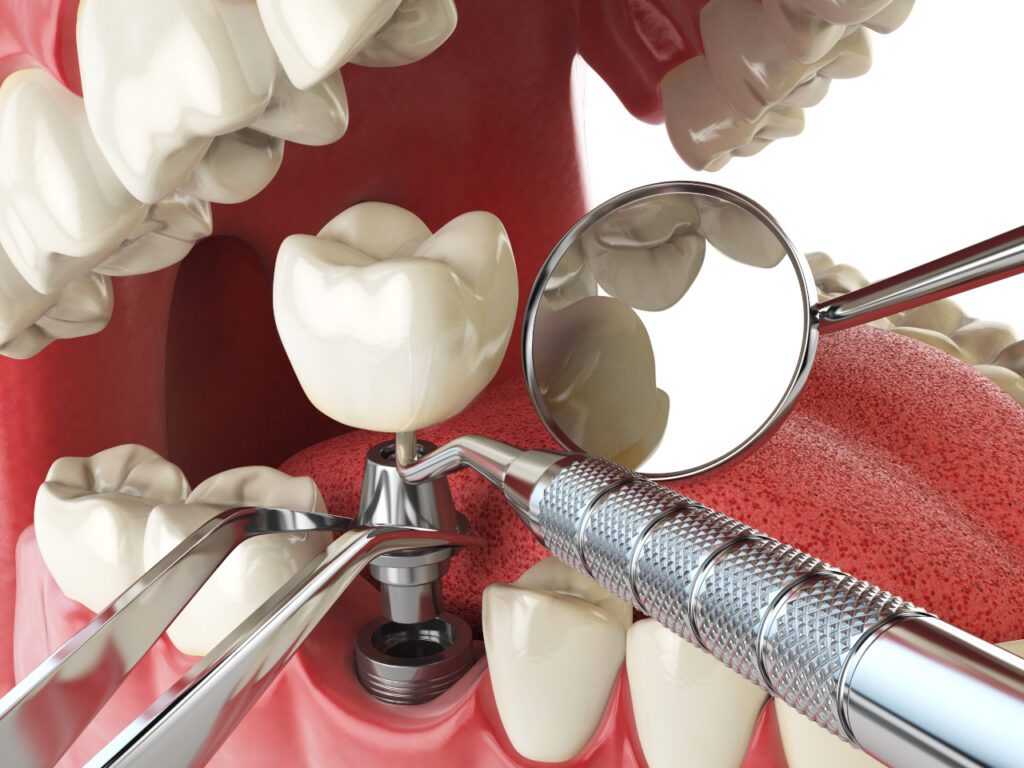
Dental implants are designed to provide stable, long-term support for replacement teeth, but that does not mean every change around an implant should be ignored. Sudden discomfort, swelling, a loose restoration, or trauma near an implant deserves professional attention. Because ARC Dental & Implant Center provides both full-scope dental implant treatment in Montvale, NJ and emergency dentistry, patients can have urgent implant concerns evaluated in the context of the entire treatment plan.
Not every unusual sensation represents a true dental implant emergency. However, recognizing the symptoms that should prompt a call can help protect the implant, surrounding tissues, and restoration. The key is to avoid guessing about whether the problem is minor when a clinical evaluation can provide a clearer answer.
What Is a Dental Implant Emergency?
A dental implant emergency is an unexpected problem involving the implant, surrounding gum or bone, or the implant-supported restoration that requires prompt evaluation.
Some concerns involve the visible crown or bridge rather than the implant itself. For example, an implant crown may become loose or damaged while the implant in the bone remains stable.
Other problems can involve inflammation or trauma around the implant site. Because patients cannot easily determine which component is responsible, professional assessment is important.
What Symptoms Should You Pay Attention To?
Contact a dental professional if you notice a sudden or significant change around an implant. Possible warning signs include:
- New or increasing pain around an implant
- Swelling or tenderness that is worsening
- A crown or bridge that feels loose
- An implant restoration that has chipped or fractured
- A sudden change in the way your bite feels
- Bleeding or drainage around an implant site
- Trauma involving an implant-supported tooth
- A sensation that the implant itself may be moving
- Difficulty comfortably chewing on an implant restoration
These symptoms can have different causes. Therefore, the appropriate treatment depends on identifying exactly which part of the implant system or surrounding tissue is affected.
What If an Implant Crown Feels Loose?
A loose implant crown does not automatically mean the implant itself has failed. Dental implants and their restorations contain multiple components, and looseness can sometimes involve the crown or connecting parts.
Nevertheless, avoid repeatedly testing the tooth with your tongue or fingers. Also avoid chewing hard foods on the affected side until the area has been evaluated.
Continuing to function normally on a loose restoration can potentially create additional wear or damage. Prompt assessment allows the dentist to identify the source of the movement and determine what needs to be repaired.
What If the Implant Itself Feels Like It Is Moving?
A dental implant is intended to be stable within the supporting bone after successful healing. Therefore, suspected movement of the implant itself warrants prompt evaluation.
However, patients can sometimes mistake movement of the crown or another restorative component for movement of the implant. This is another reason an examination matters.
Do not repeatedly push or wiggle the area to determine what is moving. Instead, minimize pressure on it and request professional guidance.
Can Dental Implants Become Infected?
The tissues surrounding dental implants require ongoing care, just as natural teeth do. Inflammation around an implant can affect the gum tissue and, in more advanced situations, the supporting structures.
Possible signs can include redness, swelling, tenderness, bleeding, or other changes around the implant. However, symptoms vary and should be professionally evaluated.
Consistent home care and routine professional monitoring are important parts of long-term implant maintenance. In addition, changes should be addressed rather than waiting for significant discomfort.
Benefits of Prompt Dental Implant Emergency Care
- Identify the affected component: Evaluation can distinguish between a problem with the crown, connecting components, implant, or surrounding tissues.
- Protect the restoration: Early attention to looseness or damage may prevent additional stress on the implant-supported tooth.
- Evaluate surrounding tissues: Gum and bone health are important to long-term implant stability.
- Address bite changes: A restoration that suddenly feels different may need professional assessment.
- Reduce uncertainty: Patients can receive a diagnosis rather than trying to determine at home whether the implant itself is affected.
- Support long-term implant care: Emergency evaluation can be integrated with ongoing maintenance and restorative planning.
What Should You Do If an Implant Crown Breaks?
If part of an implant crown or bridge chips or breaks, save any loose pieces if possible. Avoid chewing on the affected area and request an evaluation.
The restoration may be repairable or may require replacement depending on the amount and location of damage.
The dentist should also determine why the fracture occurred. Bite forces, grinding, trauma, restoration wear, and other factors may contribute.
Simply replacing a damaged restoration without considering the cause could leave the new restoration exposed to the same forces.
What Happens If You Experience Trauma Near an Implant?
An impact to the mouth should be evaluated when it affects an implant-supported tooth. Even if the restoration appears intact, trauma may affect surrounding tissues or other teeth.
ARC provides same-day emergency dental guidance for dental trauma and other time-sensitive concerns.
After an injury, avoid repeatedly checking the implant by biting hard or pushing on it. If significant facial trauma, uncontrolled bleeding, or other serious injuries are present, emergency medical care may also be appropriate.
Can Implant Problems Cause Pain?
Yes, but pain around an implant can have different sources. Gum inflammation, bite forces, restoration problems, trauma, or another dental condition nearby may produce discomfort.
Therefore, pain does not automatically tell you whether the implant itself is the source.
The dentist can evaluate the restoration, surrounding tissues, bite, and nearby teeth. Imaging may also be recommended when it provides useful diagnostic information.
Once the source is identified, treatment can be directed toward the actual problem rather than the symptom alone.
What If an Implant Cannot Be Maintained?
Many implant concerns can involve components or tissues that may be treatable. However, complex situations require individualized planning.
ARC’s implant approach includes straightforward cases as well as more advanced reconstruction, grafting, immediate implant possibilities, and full-arch treatment. Therefore, when a significant implant problem occurs, the evaluation can consider both the immediate concern and potential future options.
If additional treatment is needed, the dentist can explain the sequence and how it supports the final restoration.
How Can You Protect Dental Implants Long Term?
Good implant care does not stop when treatment is completed. Daily oral hygiene and professional maintenance remain important.
Clean around implant-supported teeth carefully according to the instructions provided by your dental team. Depending on the restoration, specialized flossing tools or other cleaning aids may be recommended.
Routine examinations allow the dentist to monitor the restoration, bite, surrounding gum tissue, and other aspects of the implant.
Also, report changes early. A crown that begins to feel slightly different, recurring bleeding, or new tenderness is easier to evaluate before the symptoms become more disruptive.
What Role Does the Bite Play?
Dental implants must function within the overall bite. The way upper and lower teeth contact can affect forces on natural teeth and implant restorations.
Grinding and clenching can create additional stress. Therefore, patients who notice wear, jaw tension, or nighttime clenching should mention those symptoms during dental visits.
A carefully planned implant restoration considers not only appearance but also how the tooth functions alongside the rest of the smile.
This reflects ARC’s broader implant philosophy, which evaluates bone, gums, neighboring teeth, tissue architecture, bite forces, and the final esthetic result as part of a complete treatment strategy.
Emergency Implant Care for Full-Arch Patients
Patients with full-arch implant restorations should also report unexpected movement, fracture, significant discomfort, or other sudden changes.
ARC provides Teeth in a Day and full-arch implant treatment for appropriate candidates. Full-arch restorations involve multiple components working together, so professional evaluation is preferable to attempting any adjustment at home.
If something feels different, avoid forcing or manipulating the restoration. Instead, describe the change as specifically as possible when requesting an appointment.
Request Dental Implant Guidance in Montvale, NJ
Dental implants are designed around stability and long-term function, so a sudden change deserves attention. A loose crown, unexpected pain, swelling, trauma, or movement should be evaluated to determine whether the issue involves the restoration, surrounding tissues, or implant itself.
ARC Dental & Implant Center provides comprehensive implant and emergency dental care at 50 Chestnut Ridge Road, Suite 210, Montvale, NJ 07645. The practice serves Montvale, Park Ridge, Woodcliff Lake, Hillsdale, River Vale, Upper Saddle River, Mahwah, and surrounding Bergen County communities.
If something feels different around a dental implant, request an appointment with ARC Dental & Implant Center. Include details about the symptoms, when they started, and whether the implant area has experienced recent trauma so the team can help determine the appropriate next step.